FAST & FREE U.S. Shipping!
 Financing Available!
 Prices Locked! Beat Tariffs!
 12-Month Warranty
 Proud U.S. Company
 Now Shipping to Canada!
 Call Us Now (800) 617-9522




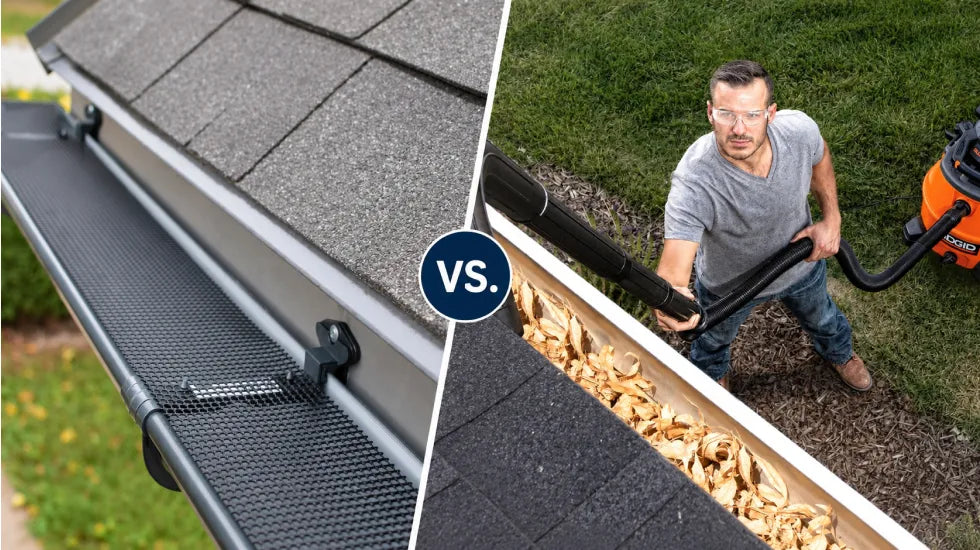
Gutter guards are often promoted as the easy fix for clogged gutters. The idea sounds simple: cover the gutter, block leaves and debris, and avoid the hassle of regular gutter cleaning. For many homeowners, that promise is appealing, especially if their property is surrounded by trees or they are tired of dealing with overflowing gutters every fall.
But gutter guards are not a maintenance-free solution.
While they can reduce the amount of debris entering the gutter system, they do not stop everything. Small debris, roof grit, seed pods, pine needles, sludge, and shingle granules can still collect over time. Debris can also build up on top of the guards, around downspout openings, and in problem areas like roof valleys and corners.
This does not mean gutter guards are a bad investment. In the right situation, they can be very helpful. They can reduce cleaning frequency, make maintenance easier, and help prevent large debris from filling the gutter channel. However, regular inspection and gutter cleaning are still necessary if you want the system to keep moving water properly.
For homeowners, understanding the difference can help prevent costly water damage. For gutter cleaning contractors, this topic is also a great way to educate customers and set honest expectations.
Let's break down what gutter guards do, what they do not do, and why regular gutter cleaning still matters.
1. What Gutter Guards Are Designed to Do
Gutter guards are designed to reduce the amount of debris that enters the gutter system. Most styles work by covering the top of the gutter while still allowing rainwater to pass through. The main goal is to block larger debris such as leaves, twigs, branches, and pests from falling directly into the gutter channel.
There are several types of gutter guards, including screen guards, micro-mesh guards, reverse-curve guards, foam inserts, brush-style guards, and perforated metal covers. Each design works differently, but they all serve the same basic purpose: reduce debris buildup and help water flow through the gutter system more easily.
For homes with heavy tree coverage, gutter guards can be useful. Leaves and twigs can quickly fill an open gutter, especially during the fall season or after a storm. Once debris collects inside the gutter, rainwater has less space to move. Over time, the debris becomes wet, heavy, and compacted. This can lead to overflow, sagging gutters, and blocked downspouts.
Gutter guards help by keeping much of that larger debris out of the gutter. Instead of dropping into the channel, leaves may land on top of the guard. In some cases, they dry out and blow away. This can make the gutter easier to maintain compared to an uncovered system.
Gutter guards may also help reduce pest problems. Open gutters filled with damp leaves and organic material can attract insects, birds, rodents, and nesting pests. A guarded system does not completely eliminate pest activity, but it can make the gutter less inviting by reducing the amount of debris inside.
The biggest benefit is reduced cleaning frequency. A home that normally needs gutter cleaning several times a year may need less frequent service after guards are installed. However, reduced maintenance is not the same as no maintenance.
That is where many homeowners misunderstand gutter guards.
2. What Gutter Guards Do Not Prevent
Gutter guards can block large debris, but they cannot stop everything. The gutter system is still exposed to rain, wind, roof runoff, and fine debris. Over time, smaller materials can still enter the gutter or collect on top of the guard.
Common debris that can still cause problems includes pine needles, seed pods, small leaves, roof grit, dirt, sludge, moss, and shingle granules. These materials are often small enough to pass through openings in the guard or collect along the surface.
Pine needles are one of the most common problems. Because they are long and narrow, they can slip through many guard designs or get stuck in the guard openings. Seed pods can also collect in small gaps and restrict water flow. In areas with flowering trees or heavy pollen, fine debris can build up faster than homeowners expect.
Shingle granules are another issue. As asphalt shingles age, they naturally shed small granules. Rainwater washes these particles down the roof and into the gutter system. Gutter guards may block leaves, but they may not stop fine roof grit from settling inside the gutter or around the downspout opening.
This type of buildup can be hard to notice from the ground. The gutter may not look clogged, but water flow may still be restricted. During light rain, the system may seem fine. During heavy rain, the reduced capacity can cause water to overflow.
Another important point is that gutter guards do not fix existing gutter problems. If the gutters are already clogged, sagging, leaking, misaligned, or draining poorly, installing guards will not solve the issue. In fact, installing guards over a dirty or damaged system can hide the problem and make future maintenance harder.
Before adding gutter guards, the gutter system should be cleaned and inspected. Downspouts should be clear, the gutter pitch should be correct, and any loose or damaged sections should be repaired.
Gutter guards are a support tool, not a cure-all.
3. Why Gutters With Guards Still Need Cleaning
One of the biggest misconceptions about gutter guards is that they make gutters maintenance-free. This is not true. Guarded gutters still need regular inspection and occasional cleaning because clogs can still form in several areas.
The first common problem area is the top of the guard. If leaves, pine needles, and roof debris sit on the guard surface, they can block water from entering the gutter. Instead of flowing through the guard and into the channel, rainwater can run over the debris and spill over the edge.
This is why some homeowners still see overflow even after installing gutter guards. The gutter itself may not be packed with leaves, but the guard surface may be covered enough to block water flow.
The second common problem area is the downspout opening. Even if the main gutter channel is mostly clear, fine debris can collect near the outlet. Once the downspout opening becomes blocked or restricted, water backs up across the gutter run. During heavy rain, this can cause overflow along the roofline.
Roof valleys are another area that often needs attention. Valleys direct a high volume of water and debris into one spot. If a gutter guard is installed below a roof valley, debris can build up quickly in that area. This is especially common on homes with steep roofs or heavy tree coverage.
Corners and end caps can also collect debris. These areas may hold water longer, especially if the gutter pitch is not perfect. Over time, dirt and organic material can turn into sludge, which slows drainage and adds weight to the gutter system.
Loose or damaged guards can create another problem. Sections can shift, lift, or separate over time. When this happens, debris can enter through gaps, or water may not flow into the gutter correctly. Regular inspection helps catch these issues before they cause bigger problems.
This is why gutter cleaning still matters even when guards are installed. Cleaning is not just about removing visible leaves. It is about making sure the entire drainage system is working properly.
4. Gutter Guards vs. Regular Cleaning Is Not an Either-Or Choice
Many homeowners think they need to choose between gutter guards and regular gutter cleaning. In reality, these two solutions work best together.
Gutter guards help reduce debris entry. Regular gutter cleaning removes buildup and confirms that water is flowing correctly. One helps prevent heavy buildup, while the other keeps the system functioning over time.
A good way to explain it is this: gutter guards reduce the workload, but gutter cleaning protects the performance of the system.
For example, a home without guards may need cleaning two or more times a year, especially if it has trees nearby. A home with guards may not need cleaning as often, but it still needs inspection. The maintenance may be lighter, but it should not be skipped completely.
The goal of a gutter system is to move water away from the home. If water cannot enter the gutter, travel through the channel, and exit through the downspout, the home is still at risk. Overflowing water can damage fascia boards, stain siding, erode landscaping, pool near the foundation, and contribute to basement or crawlspace moisture problems.
This is why the question should not be, "Do I need gutter guards or gutter cleaning?" The better question is, "What maintenance plan will keep water moving safely away from the property?"
For many homes, the answer is both. Gutter guards can reduce the amount of debris entering the system, and regular cleaning can keep the system performing as intended.
5. How Often Gutters With Guards Should Be Inspected
The right maintenance schedule depends on the property. Tree coverage, roof shape, gutter design, weather, and the type of gutter guard all affect how often gutters should be inspected.
Homes without gutter guards usually need gutter cleaning at least twice a year. Spring and fall are the most common times. Spring cleaning helps remove debris from winter storms, tree blossoms, seeds, and early seasonal buildup. Fall cleaning removes leaves before winter rain, snow, or heavy storms make clogs worse.
Homes with heavy tree coverage may need cleaning more often. Properties with pine trees, overhanging branches, or seed-heavy trees may need service three or more times per year.
Homes with gutter guards may need less frequent cleaning, but they should still be inspected at least once or twice a year. A guarded gutter system should be checked to make sure water is entering properly, the guards are secure, debris is not collecting on top, and downspouts are draining correctly.
After major storms, it is also smart to check the gutters. High winds can push leaves, branches, and roof debris onto the guards. Storms can also loosen guard sections or wash debris into downspout openings.
Homeowners should schedule gutter cleaning or inspection if they notice water spilling over the edge, stains on siding, water pooling near the foundation, sagging gutters, loose guards, plant growth, or downspouts that are not draining properly.
These signs usually mean the gutter system is not working as it should.
6. When Gutter Guards Are Worth It and When Cleaning Comes First
Gutter guards can be worth it, but they are not always the first priority. Before installing them, homeowners should look at the condition of the existing gutter system.
Gutter guards make the most sense for homes with heavy tree coverage, recurring leaf buildup, or gutters that need frequent cleaning. They can also be helpful for homeowners who want to reduce the number of times they need to schedule service each year.
They are especially useful for homes near large trees, properties with frequent fall debris, and rooflines that are difficult to access. If large leaves and twigs are the main issue, gutter guards can help reduce how much debris enters the gutter.
However, regular gutter cleaning should come first if the system is already neglected. If gutters are packed with debris, overflowing, sagging, leaking, or draining poorly, those issues need to be fixed before guards are installed.
Installing guards over a clogged system can trap debris underneath. It can also make the problem harder to see and harder to solve later. A clean, properly functioning gutter system should always be the starting point.
Cost is another factor. Gutter guards usually require a higher upfront investment because of the product and installation cost. Regular cleaning costs less per visit, but it is a recurring service. For homes with heavy debris, guards may reduce the number of cleanings needed over time. For homes with light debris, regular cleaning alone may be enough.
The most realistic way to compare the two is not "pay for guards and never clean again." A better comparison is "pay more upfront to reduce debris and maintenance frequency, while still scheduling inspections and cleaning when needed."
7. The Safest and Most Efficient Way to Maintain Gutters With or Without Guards
Gutter maintenance can be risky when it requires repeated ladder use, roof walking, or working on uneven ground. This is one reason many homeowners hire professionals. It is also why contractors need efficient tools and clear inspection methods.
Traditional gutter cleaning often involves climbing a ladder, moving it from section to section, and removing debris by hand. This can be slow, tiring, and less efficient on larger properties.
Ground-based gutter cleaning tools can help make the process safer and more efficient. A gutter vacuum system, such as Gutter Pro Vac, allows professionals to remove debris from the ground in many cleaning situations. This helps reduce repeated ladder work and supports a more efficient workflow.
For guarded gutters, inspection is also important. A contractor may need to check the guard surface, roof valleys, corners, downspout openings, and signs of loose or damaged sections. In some cases, debris may need to be removed from the top of the guards. In other cases, fine buildup may need to be cleared from the gutter channel or downspout area.
For contractors, this is a good opportunity to educate customers. Some homeowners believe gutter guards eliminate the need for cleaning. A professional can explain that guards reduce debris, but they do not stop all buildup. Showing problem areas before and after service can help customers understand the value of regular maintenance.
For homeowners, the main takeaway is simple: whether the home has gutter guards or not, the gutter system still needs to move water properly. If debris blocks the guard surface, clogs the downspout, or builds up in valleys and corners, maintenance is still needed.
Gutter Pro Vac fits naturally into this type of work because it supports practical, ground-based gutter cleaning for professionals and property owners who want a safer and more efficient way to maintain gutters.
Conclusion
Gutter guards and regular gutter cleaning are not competing solutions. They work best together.
Gutter guards help block larger debris such as leaves, twigs, and pests from entering the gutter system. They can reduce cleaning frequency and make maintenance easier, especially for homes with heavy tree coverage. However, they do not prevent every type of buildup.
Small debris, pine needles, seed pods, roof grit, sludge, and shingle granules can still collect over time. Debris can also sit on top of the guards and prevent water from entering the gutter. Downspouts, roof valleys, corners, and steep rooflines can still become problem areas.
That is why guarded gutters still need inspection and occasional cleaning. Regular gutter cleaning helps keep water flowing properly, protects the home from overflow, and extends the value of the gutter guard system.
For homeowners, the best approach is to view gutter guards as part of a maintenance plan, not a replacement for one. For contractors, this is an opportunity to educate customers honestly and provide a service that protects the home long term.
Whether a property has open gutters or guarded gutters, the goal is the same: keep water moving safely away from the roofline, siding, landscaping, and foundation.
Gutter Pro Vac helps make gutter maintenance safer and more efficient by supporting ground-based cleaning and practical inspection workflows. If your gutters have not been checked recently, now is a good time to make sure they are clear, secure, and ready for the next heavy rain.
FAQ
Do gutter guards eliminate the need to clean the gutters entirely?
No. Gutter guards reduce how much debris enters the gutter, but they do not eliminate the need for cleaning altogether. Pine needles, seed pods, roof grit, sludge, and shingle granules can still collect on top of the guards or slip through, so occasional inspection and cleaning are still needed to keep water flowing and protect the home from overflow.
How often should I inspect or clean gutters that have guards installed?
Most guarded gutters should be inspected at least once or twice a year, typically in spring and fall. Homes with heavy tree coverage, pine trees, or frequent storms may need to check more often. Guards reduce cleaning frequency, but they don't remove the need for it.
Can gutter guards handle heavy rain without overflowing?
Performance varies by guard type. Reverse-curve guards (sometimes marketed as surface tension guards) and micro-mesh guards generally handle water flow better than basic screens while still keeping out small debris. Even well-performing guards need periodic inspection, since debris sitting on the guard surface can still cause water to spill over the edge during heavy rain.
Will debris still build up even with guards installed?
Yes. Leaves, pine needles, shingle grit, and fine sediment can collect on top of the guards, around downspout openings, or in roof valleys, regardless of guard type. That buildup can be hard to spot from the ground, which is why regular inspection matters even when the gutter looks clear.
Is professional cleaning still worth it if I have gutter guards, or can I maintain them myself?
Many homeowners and contractors handle guarded gutters themselves using a ground-based gutter vacuum system, which removes debris from the guard surface, downspout openings, and gutter channel without ladder work. A system like Gutter Pro Vac makes it practical to inspect and clean guarded gutters directly from the ground, which is especially useful for two- and three-story homes.
How can I tell if my gutter guards need attention?
Watch for water overflowing during storms, visible debris sitting on top of the guards, plant growth in the gutter, or water spilling from seams and corners. These signs usually mean debris has built up on the guard surface or downspout, and it's time to inspect and clear the system.
What is the best maintenance routine for gutters with guards?
Inspect the gutters and guards at least twice a year, plus after major storms. Use a ground-based gutter vacuum system to clear debris from the guard surface, corners, valleys, and downspout openings without climbing. For heavier buildup or harder-to-reach rooflines, a stronger commercial-grade vacuum setup can make the job more efficient.
Which type of gutter guard should I choose to reduce cleaning frequency?
It depends on the debris you deal with most. Micro-mesh guards block fine debris and shingle grit well, reverse-curve guards perform well in heavy rain, and screen or foam-style guards are simpler but may need more frequent surface cleaning. Whichever type you choose, make sure it's still easy to inspect and clean when debris does build up.
Do gutter guards help prevent problems like foundation damage?
Properly installed guards reduce overflow near the foundation by keeping large debris out of the gutter channel. But guards don't fix an incorrect gutter pitch, undersized downspouts, or existing damage — those issues need to be addressed separately, and the system still needs regular inspection to keep water moving away from the house.
Is it useful to test water flow through guarded gutters?
Yes. Running water through the gutter system, or checking flow during and after rain, is a simple way to spot blockages. If you see slow drainage or overflow, it's a sign that debris has built up on the guard surface or in the downspout and the system needs to be cleared — a ground-based vacuum makes that easy to do without a ladder.