FAST & FREE U.S. Shipping!
 Financing Available!
 Prices Locked! Beat Tariffs!
 12-Month Warranty
 Proud U.S. Company
 Now Shipping to Canada!
 Call Us Now (800) 617-9522



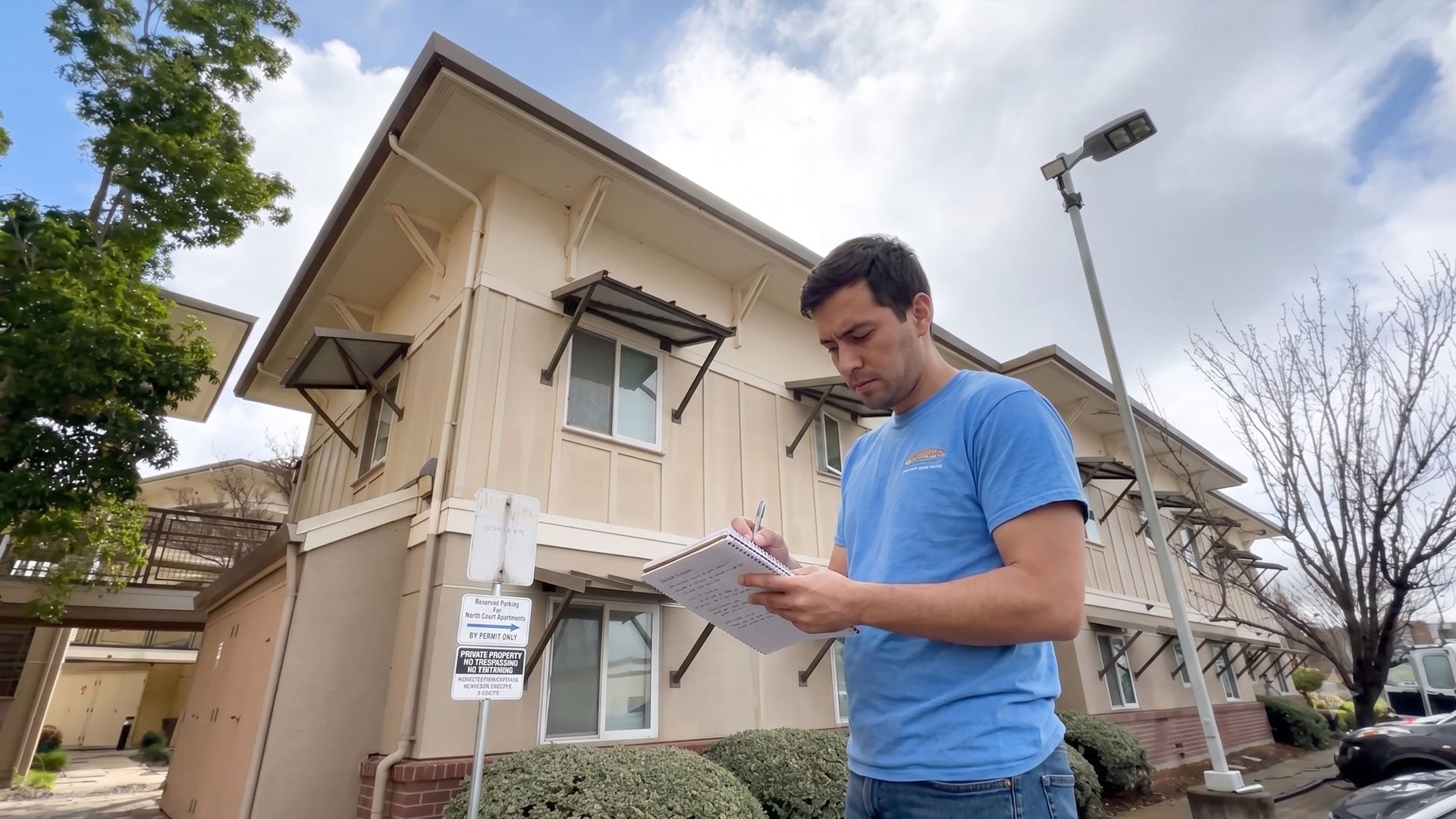
A commercial gutter cleaning quote that loses money usually starts with a site survey that missed something. Roof height was underestimated. Debris was heavier than expected. A downspout ran underground. Access required two extra hours of setup. The fix is not charging more after the fact. The fix is a site survey that separates visible scope from hidden risk before the proposal leaves your inbox.
This guide gives commercial gutter cleaning contractors a structured site survey process, a field worksheet they can use on any mixed-use commercial property, and guidance on how GutterProVac systems fit into the planning decisions that determine whether a job is profitable before it starts. Property managers who review this checklist alongside a contractor will understand exactly what is and is not included in a professional gutter cleaning scope.
Why Commercial Gutter Cleaning Requires a Different Survey Than Residential Work
Residential gutter cleaning is usually a known quantity. One house, two stories, standard gutters, one or two downspouts, normal access from the driveway. Most contractors can quote residential work from a street-level look and a phone call. Commercial properties are different in every dimension that affects time, labor, and equipment.
A commercial property might include multiple buildings with different roofline heights on the same lot. Gutters may run along parapet walls, internal drainage systems, or custom profiles that standard nozzles cannot reach. Debris loads are harder to predict without direct access. Downspouts may discharge to underground drains that back up without any visible sign from the ground. Maintenance contacts who approve quotes are often not the people who have seen the gutters overflow.
The site survey is the contractor’s opportunity to build a quote that reflects the actual job, not the job they hoped it would be. It is also the document that protects the contractor when a property manager asks why a blocked underground drain was not included in the cleaning price.
What Ground-Level Vacuum Systems Change About Commercial Gutter Cleaning
Before discussing the survey checklist, it helps to understand how the equipment method affects the survey questions that matter. GutterProVac systems are ground-level vacuum systems. The contractor stays on the ground while the gutter debris is extracted through a pole-and-hose assembly connected to a high-capacity vacuum unit. No ladders. No scaffold. No roof access required for the cleaning operation itself.
This changes the survey in a specific way: the questions shift from ladder placement and scaffold permits to pole reach, hose run length, power source location, and debris disposal planning. Ground-level operation removes several of the most common commercial risk variables and replaces them with a different set of equipment planning variables.
GutterProVac’s Cyclone lineup covers three primary equipment tiers relevant to commercial work. The residential-grade Cyclone 2200W runs on standard 120V power and is documented at 200.22 CFM airflow and 88.65 inches of water lift. The commercial-grade Cyclone II 3600W runs on 240V and delivers 379.82 CFM with 94.56 inches of water lift across three motors, weighing 57 pounds with a 16-foot standard hose and a 28-foot power cord. All GutterProVac kits ship via LTL freight, which means equipment planning needs to happen before a commercial route is sold.
The Site Survey Checklist: What to Record Before Writing the Quote
A commercial gutter cleaning site survey has six categories. Work through them in order on the first walkthrough. Do not write the quote until all six are complete or explicitly noted as unknown.
1. Building Count and Gutter Layout
Count every structure on the property that has gutters included in the scope. Note the gutter profile on each structure: K-style, half-round, box gutter, or proprietary profile. Estimate the total linear footage for each building, even roughly. A property manager may tell you the gutter length, but that number often excludes internal runs, parapet-mounted gutters, or secondary drainage on canopies and covered walkways.
2. Roof Height and Pole Reach Requirements
Measure or estimate the gutter height at the lowest and highest points on each structure. GutterProVac’s pole systems reach 20 feet, 28 feet, and 40 feet from the ground depending on the configuration. The 40-foot carbon clamping pole kit includes 10 four-foot carbon fiber sections with a slide-and-lock connection, non-slip surface, silicone U-bend, and aluminum nozzles. The 28-foot aluminum pole system is the standard mid-height option for two-story commercial structures.
Do not assume the pole kit in your van matches the height of the next building. Survey the roof height at the far end of each gutter run, not just at the entry point, because commercial rooflines are often not level. Grade changes at the ground and varying parapet heights can add several feet to the effective reach requirement mid-run.
3. Debris Type and Load Assessment
Note the following during the survey: visible debris at downspout outlets, overflow staining on the building face below gutter lines, moss or organic growth on the roof surface adjacent to gutters, tree species and proximity overhanging the structure, and any evidence of previous overflow pooling at the foundation.
Wet leaves, moss, sludge, compacted roof grit, and standing water are slower to extract, fill the tank faster, and require more frequent disposal stops. The Cyclone II 3600W runs a 20-gallon tank. On a property with heavy wet debris, that tank may need emptying more frequently than the same machine on a dry-leaf job. Tank turnaround time belongs in the labor estimate.
4. Downspout Count and Discharge Verification
Count every downspout on every structure in the scope. Note whether each discharges to grade, into a splash block, into an underground drain, or into a French drain system. The site survey should state clearly whether downspout flow verification is included in the cleaning scope and name the limit of what can be verified from the ground. Underground drainage blockages are the most common source of disputed gutter cleaning invoices on commercial properties.
5. Access and Hose Run Planning
Map the access path from the truck or trailer to each gutter run. Note gates, locked service yards, tenant-occupied areas, landscaping, overhead obstacles, and the distance from the nearest power outlet to the machine position. The Cyclone II 3600W has a 28-foot power cord as standard. For larger properties, GutterProVac offers hose extensions and a 50-foot hose for Cyclone commercial systems, available through the GutterProVac parts and accessories collection.
6. Documentation and Reporting Requirements
Ask the property manager during the survey what documentation they expect at closeout. Some commercial clients want before-and-after photos. Some want a written condition report. Some require digital submission to a facilities management system. Reporting time is labor and belongs in the quote.
Field Survey Worksheet for Mixed Commercial Sites
Use this worksheet after the first walkthrough and before the final proposal is sent. Complete each row for every building in the scope.
| Survey Item | What to Record | Why It Changes the Quote | Equipment Planning Note |
|---|---|---|---|
| Roofline height | One story, two story, tall parapet, uneven grade | Reach and pole angle change crew speed and safety planning | Compare 20ft, 28ft, and 40ft pole options before committing |
| Debris load | Dry leaves, wet leaves, moss, roof grit, standing water, or mixed sludge | Wet material fills the tank faster and slows disposal throughout the route | Plan tank turnaround frequency and disposal location before starting |
| Downspout count | Number of outlets and visible discharge points | Each outlet is a potential diagnosis task that adds time | Mark outlets that need a flow check and confirm what is in scope |
| Access path | Gates, locked areas, landscaping, tenant spaces, carry distance from vehicle | Carry distance and setup time between zones affect labor on every visit | Decide whether hose extension or additional staging positions are needed |
| Power source | Nearest 120V or 240V outlet, cord length required, generator needed | 240V Cyclone II requires a generator if no outlet is accessible on site | Confirm power source location on every building before scheduling |
| Documentation requirement | Before photos, after photos, condition report, digital submission | Reporting time is labor and belongs in the scope | Build photo proof and written notes into the closeout checklist |
Choosing the Right GutterProVac System for Commercial Work
The site survey output directly determines which GutterProVac system is appropriate for the job. The key variables are building height, debris load, tank capacity requirement, and power source availability.
For single or double-story commercial structures with moderate debris loads and standard 120V power access, the Cyclone 2200W in a 20-gallon configuration delivers 200.22 CFM and 88.65 inches of water lift. It is available with 20-foot aluminum, 20-foot carbon clamping, or 28-foot aluminum poles.
For taller structures, heavier debris loads, or jobs where production rate per hour drives margin, the Cyclone II 3600W commercial systems deliver 379.82 CFM with 94.56 inches of water lift. These machines require 240V and a generator on properties without accessible 240V outlets. The 40-foot carbon clamping pole option reaches up to four stories, making it the appropriate choice for mid-rise commercial buildings, elevated parapet gutters, and structures where the gutter height exceeds 28 feet at the furthest point of the run.
For the largest commercial sites, the 27-gallon Cyclone II 3600W stainless steel system adds tank capacity that reduces disposal frequency on high-volume debris jobs.
How to Write a Commercial Gutter Cleaning Quote That Protects Both Parties
A professional commercial gutter cleaning quote has four components: what is included, what is not included, the assumptions behind the price, and the conditions that would change the scope.
What is included should name the method, the reach, and the specific tasks. Example: gutter vacuum cleaning of accessible gutter runs at specified zones, debris extraction and removal, outlet clearing at visible and accessible downspout outlets, and photo documentation at closeout.
What is not included should name the things most likely to generate a dispute: underground drain clearing, gutter repairs, damaged hanger replacement, roof damage assessment, electrical hazard clearance, inaccessible gutter sections, and anything underground.
Assumptions behind the price should state what the quote takes for granted: normal access during business hours, gutters free of electrical hazards, debris volume consistent with the site survey assessment, and a power source within cord range at each building.
Conditions that change the scope are the survey gaps that could not be confirmed during the walkthrough. Name them in the quote rather than discovering them as surprises during the job.
Zone Pricing for Large Multi-Building Sites
On large commercial properties with multiple buildings, zone pricing gives the property manager flexibility and the contractor better margin control. Divide the property by building or logical cleaning segments and quote each zone separately.
Zone pricing serves three functions: it lets the property manager approve partial work when budget is constrained; it gives the crew a route map that prevents wasted movement; and it isolates a complicated zone from the rest of the quote, so a problem in one zone does not turn the entire job into a cost dispute.
After the first documented cleaning, zone records become a maintenance baseline. The contractor can recommend quarterly, semiannual, or seasonal service for each zone based on actual debris patterns observed during the first job.
Closing the Commercial Gutter Cleaning Job Correctly
A professional closeout document has three parts: what was cleaned, what could not be confirmed, and what should be monitored before the next maintenance visit.
What was cleaned should name the buildings and zones serviced, the method used, and whether downspout outlets were flow-tested or simply cleared at the opening. What could not be confirmed should note inaccessible areas, downspouts showing signs of underground blockage, and any gutter damage observed during cleaning. What should be monitored before the next rain gives the property manager actionable information and positions the contractor as an expert advisor rather than a one-time vendor.
Equipment Planning Before Selling the Commercial Route
The full range of residential and commercial systems, pole options, and accessories is available at the GutterProVac gutter vacuum systems collection. Carbon clamping pole sets from 20 to 40 feet are at the carbon clamping pole collection. Hose extensions, nozzle kits, and accessories are through the parts and accessories collection.
Because all GutterProVac vacuum systems ship via LTL freight, equipment selection and ordering needs to happen before a commercial route is sold. Survey the site, confirm the equipment configuration, verify delivery lead time, and then send the proposal.
Frequently Asked Questions
How should a contractor survey commercial gutters before writing a quote?
Survey commercial gutters by separating visible scope from unknown risk. Count buildings, estimate gutter length by structure, note roofline height at the highest and lowest points of each run, identify access restrictions, document downspout count and discharge type, and confirm power source location for each building. Name every item that cannot be confirmed during the survey as an assumption or exclusion in the quote.
What pole length does commercial gutter cleaning require?
The right pole length depends on roof height, ground slope, gutter setback from the building face, and safe working angle. GutterProVac systems are available with 20-foot, 28-foot, and 40-foot pole configurations. The 40-foot carbon clamping pole kit uses 10 four-foot sections and is designed for properties up to four stories. Do not commit to a pole length without measuring the gutter height at the furthest point of each run.
What is the difference between the Cyclone 2200W and Cyclone II 3600W for commercial work?
The Cyclone 2200W is a 120V dual-motor system delivering 200.22 CFM and 88.65 inches of water lift, practical for single and double-story commercial work with standard power access. The Cyclone II 3600W is a 240V three-motor commercial system delivering 379.82 CFM and 94.56 inches of water lift, designed for taller structures and higher production requirements. The 3600W requires a generator on sites without accessible 240V power.
Should wet debris be quoted separately from dry debris?
Yes, when the site survey indicates significant wet debris, moss, sludge, or standing water. Wet debris extracts more slowly, fills the vacuum tank faster, and requires more frequent disposal stops. A flat quote that treats a wet-debris roof the same as a dry-leaf job will underperform on labor margin.
How should downspouts be handled in a commercial gutter cleaning quote?
State clearly whether downspout clearing is included and to what extent. Clearing visible debris at the downspout opening is standard. Flow-testing a downspout for underground drainage blockages is a separate diagnostic task. Clearing an underground drain is a separate trade. Leaving this distinction vague is the source of most post-job disputes with property managers.
What information should a contractor leave with a property manager at closeout?
A professional closeout document should state what was cleaned and the method used, which downspouts were cleared and whether flow was confirmed, any damage or hazards observed during cleaning, and what to monitor before the next significant rain. This turns a single cleaning visit into a maintenance record and creates a factual basis for recommending recurring service intervals.
Can a residential GutterProVac system handle commercial gutter cleaning?
Some residential GutterProVac systems are described as suitable for light commercial work. Whether they fit a specific commercial property depends on building height, debris load, and tank capacity relative to debris volume. Confirm system specs against the site survey findings before committing to a commercial route with equipment rated for residential use.
Why does equipment planning need to happen before selling a commercial route?
GutterProVac vacuum systems ship via LTL freight. A contractor who wins a commercial account and then orders equipment faces a gap between the signed proposal and the first service date. Survey the site, select the correct system configuration, confirm delivery timing, and then submit the proposal with a realistic start date.
How does zone pricing help on large commercial properties?
Zone pricing divides a large property into separately quoted segments, giving the property manager flexibility to approve partial work within budget constraints, giving the crew a logical route map, and isolating complicated zones from straightforward ones. After the first cleaning, zone records become the foundation for data-driven maintenance recommendations.
What should a commercial gutter cleaning quote exclude by name?
Standard named exclusions include underground drain clearing, gutter repair or hanger replacement, roof damage assessment, electrical hazard clearance, inaccessible gutter sections not visible during the survey, and work on structures or zones not listed in the scope. Naming exclusions is professional practice that protects both the contractor and the property manager.