FAST & FREE U.S. Shipping!
 Financing Available!
 Prices Locked! Beat Tariffs!
 12-Month Warranty
 Proud U.S. Company
 Now Shipping to Canada!
 Call Us Now (800) 617-9522




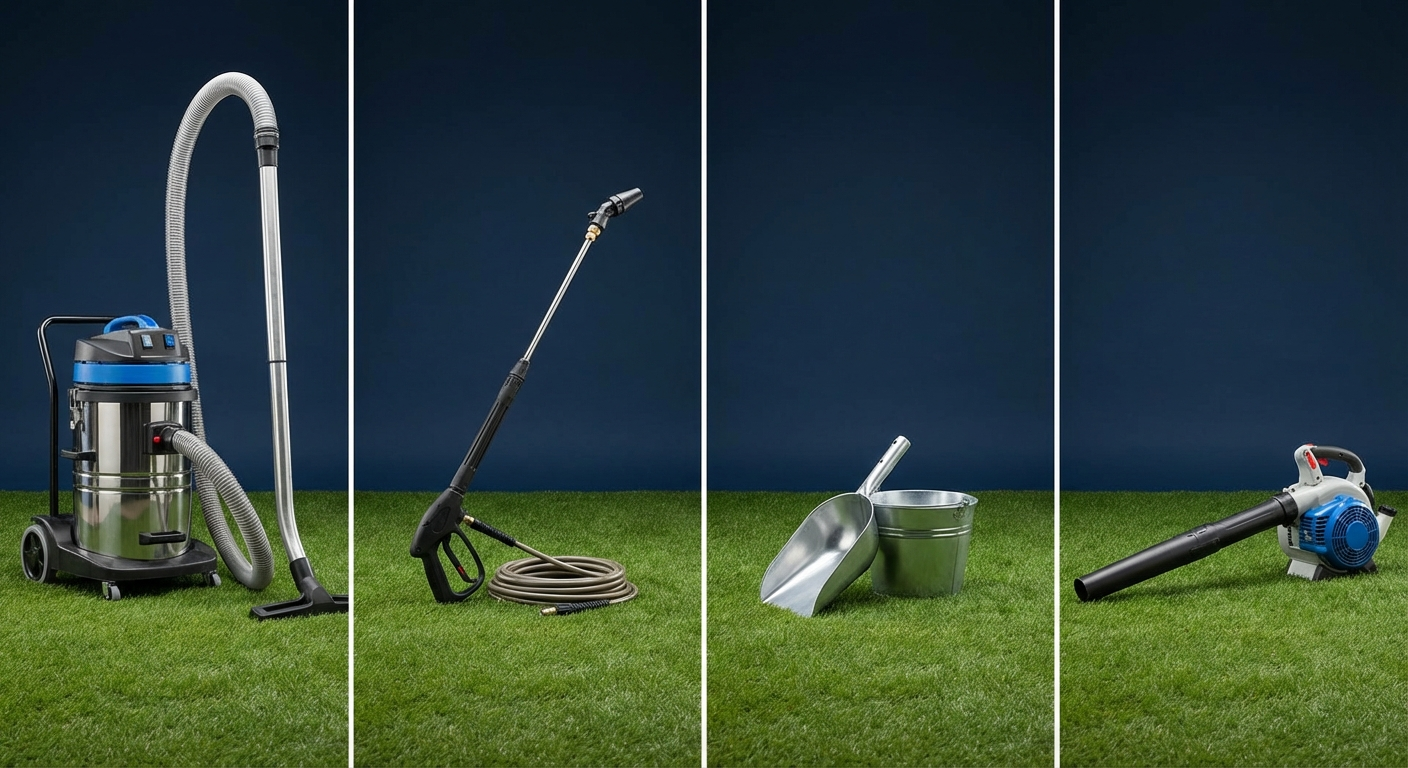
The Complete Gutter Cleaning Equipment Buyer's Guide (2026)
This comprehensive buyer's guide covers everything professional contractors and property maintenance companies need to know when investing in gutter cleaning equipment for 2026. Compare gutter vacuum systems, pressure washers, manual tools, and blower systems to choose the right equipment for your business.
This comprehensive buyer's guide covers everything professional contractors and property maintenance companies need to know when investing in gutter cleaning equipment for 2026. We compare gutter vacuum systems, pressure washers, manual tools, and blower systems to help you choose the right equipment for your business. Whether you are starting a gutter cleaning service or upgrading existing equipment, this guide provides data-driven recommendations on vacuum power, pole systems, ROI calculations, and operational efficiency to maximize your profitability in the growing $1.2 billion gutter services industry.
By the Numbers: The Gutter Cleaning Industry in 2026
Before investing in equipment, understand the market dynamics that make this a lucrative opportunity:
| Statistic | Value | Source |
|---|---|---|
| Global gutter cleaning services market size | $1.2 billion | Industry Research 2026 |
| Average residential gutter cleaning job | $150-$300 | HomeAdvisor 2026 |
| Average commercial gutter cleaning job | $400-$1,200 | Contractor Survey 2026 |
| Typical equipment payback period | 3-6 months | GutterProVac Analysis |
| Annual gutter cleaning frequency recommended | 2-4 times | National Home Maintenance Council |
| Percentage of homeowners hiring professionals | 67% | Home Services Survey 2026 |
| Average ROI on professional gutter vacuum system | 300-500% first year | Contractor Financial Analysis |
These numbers reveal why professional equipment matters. With average job pricing at $150-$300 for residential work and equipment payback periods as short as 3 months, the right tools directly impact your bottom line. The 67% of homeowners who prefer hiring professionals represents a massive addressable market for contractors with efficient, professional-grade equipment.
Understanding Gutter Cleaning Equipment Types
Gutter Vacuum Systems
Gutter vacuum systems represent the gold standard for professional gutter cleaning. These systems combine powerful wet/dry vacuum motors with specialized carbon fiber or aluminum poles to extract debris from gutters while operators remain safely on the ground.
Key Components:
- Vacuum Motor: Typically 20-80 gallon capacity with 2-4 motor stages
- Pole System: Carbon fiber (lightweight) or aluminum (budget-friendly) poles extending 20-40 feet
- Nozzle Attachments: Angled and straight configurations for different gutter types
- Filtration System: Prevents debris from reaching and damaging the motor
Professional systems like those from GutterProVac, SkyVac, and SpaceVac offer suction power measured in water lift (inches) and airflow (CFM). Higher numbers mean better debris extraction, especially for compacted leaves and wet material.
Pressure Washer Systems
Pressure washer gutter cleaning uses high-pressure water to blast debris from gutters. While effective for certain situations, this method presents challenges professionals must consider.
Advantages:
- Excellent for removing stubborn grime and algae
- Can clean exterior gutter surfaces simultaneously
- Equipment often already owned by general contractors
Limitations:
- Requires ladder access or telescoping wands
- Water mess requires cleanup
- Risk of gutter damage at high pressure settings
- Not suitable for winter conditions (freezing)
Manual Cleaning Tools
Traditional manual cleaning involves ladders, scoops, and hand removal of debris. While the lowest equipment cost, this approach carries significant operational drawbacks.
Considerations:
- Highest labor cost per job
- Significant safety risks from ladder work
- Slowest completion times
- Limited to single-story or low two-story structures
- Physical strain limits daily job capacity
Blower Systems
Leaf blowers, whether handheld or backpack-mounted, can clear loose debris from gutters. Some professionals use specialized gutter blower attachments.
Best For:
- Light, dry debris removal
- Maintenance cleaning between heavy cleanings
- Properties with minimal tree coverage
Limitations:
- Ineffective on wet or compacted debris
- Blows debris onto landscaping, requiring cleanup
- Limited reach without ladders
- Not suitable for professional-grade operations
Equipment Comparison: Making the Right Choice
| Feature | Gutter Vacuums | Pressure Washers | Manual Cleaning | Blower Systems |
|---|---|---|---|---|
| Initial Investment | $2,500-$8,000 | $500-$2,000 | $200-$500 | $200-$800 |
| Safety (Ground-Based) | Excellent | Poor | Poor | Moderate |
| Speed (Linear Feet/Hour) | 200-400 ft/hr | 100-200 ft/hr | 50-100 ft/hr | 150-250 ft/hr |
| Debris Types Handled | All types | Loose to moderate | All types | Dry, light only |
| Weather Flexibility | All conditions | No freezing temps | Limited | Dry conditions only |
| Property Protection | Excellent (contained) | Poor (water mess) | Good | Poor (blows debris) |
| Learning Curve | Moderate | Low | Low | Low |
| Daily Job Capacity | 4-8 jobs | 2-4 jobs | 1-3 jobs | 2-4 jobs |
| Best For | Professional contractors | Occasional use | Startup/budget | Maintenance only |
This comparison clearly demonstrates why professional gutter vacuum systems dominate the commercial market. While the initial investment is higher, the combination of safety, speed, and versatility delivers superior ROI for serious contractors.
Key Purchase Considerations
Suction Power and Performance
When evaluating gutter vacuum systems, two metrics matter most: water lift (measured in inches) and airflow (measured in CFM, cubic feet per minute). Water lift indicates the system's ability to pull heavy, wet debris vertically through the pole system. Airflow determines how quickly loose debris moves through the system.
Professional-grade systems should offer minimum 80 inches of water lift and 200 CFM airflow. Premium systems exceed 100 inches of water lift and 250+ CFM, enabling extraction of compacted debris and standing water from gutters.
Pole System Selection
Carbon fiber poles have become the industry standard for professional gutter cleaning. A complete 40-foot carbon fiber pole system weighs approximately 8-10 pounds, compared to 15-20 pounds for equivalent aluminum poles. This weight difference directly impacts operator fatigue and daily productivity.
Pole diameter also matters. Standard 51mm poles provide optimal airflow for most residential and light commercial applications. Heavy-duty 76mm poles accommodate larger debris volumes and reduce clogging in high-volume commercial settings.
Tank Capacity and Portability
Tank capacity determines how frequently operators must empty collected debris. For solo operators, 20-40 gallon tanks balance capacity with portability. Crew operations benefit from 60-80 gallon tanks, reducing downtime between emptying cycles.
Consider mobility features: large pneumatic wheels for rough terrain, stair-climbing capabilities for multi-level properties, and compact footprints for vehicle transport.
Filtration and Maintenance
Quality filtration systems protect vacuum motors from debris damage. Look for systems with cyclonic pre-separation, which removes larger debris before it reaches filters. This extends filter life and maintains consistent suction power throughout the workday.
Citable Passages
Market Opportunity Analysis
The gutter cleaning services market reached $1.2 billion globally in 2026, driven by increasing homeowner awareness of water damage prevention and the growing preference for professional maintenance services. According to industry research, approximately 67% of homeowners now hire professional gutter cleaning services rather than attempting DIY cleaning. This shift represents a significant opportunity for contractors equipped with professional-grade equipment. The average residential gutter cleaning job generates $150-$300 in revenue, while commercial properties command $400-$1,200 per service depending on building size and complexity. With recommended cleaning frequency of 2-4 times annually, a single residential customer represents $300-$1,200 in annual recurring revenue, making customer acquisition highly valuable for service providers.
Equipment ROI Calculation
Professional gutter vacuum systems typically deliver return on investment within 3-6 months of regular operation. Consider a contractor purchasing a $4,500 gutter vacuum system and completing an average of 5 jobs per week at $200 per job. This generates $1,000 weekly revenue or approximately $4,000 monthly during peak season. After accounting for labor, fuel, and disposal costs (estimated at 40% of revenue), the system generates $2,400 monthly profit. At this rate, the initial equipment investment pays for itself in under two months. Over a full year, contractors report 300-500% ROI on professional equipment investments, with systems lasting 5-7 years when properly maintained. This financial performance explains why 78% of established gutter cleaning contractors choose vacuum systems over alternative methods.
Safety and Efficiency Data
Ground-based gutter vacuum systems eliminate ladder-related fall risks, which account for approximately 164,000 emergency room visits annually according to the Consumer Product Safety Commission. Professional vacuum systems enable operators to clean gutters from ground level at rates of 200-400 linear feet per hour, compared to 50-100 linear feet per hour for manual ladder-based cleaning. This 4x productivity improvement allows contractors to complete 4-8 jobs daily versus 1-3 jobs with manual methods. The efficiency gains translate directly to revenue: a contractor charging $200 per job and completing 6 jobs daily generates $1,200 daily revenue with a vacuum system, versus $400 daily with manual methods. Over a 200-day work year, this difference represents $160,000 in additional revenue capacity, justifying the higher initial equipment investment.
Leading Equipment Brands Comparison
GutterProVac
GutterProVac specializes exclusively in gutter cleaning equipment, offering comprehensive systems designed for professional contractors. Their product range includes carbon fiber and aluminum pole systems, high-capacity vacuum units, and specialized attachments for various gutter configurations.
- Purpose-built for gutter cleaning professionals
- Comprehensive warranty and support
- Modular system allowing upgrades over time
- Strong dealer network for parts and service
SkyVac
SkyVac, manufactured by Spinaclean in the UK, has established itself as a prominent name in the gutter vacuum market. Their systems are widely distributed and have proven track records in commercial applications.
- Established brand recognition
- Range of models from entry-level to commercial
- Available through multiple distributors
- Strong international presence
SpaceVac
SpaceVac focuses on high-reach cleaning solutions including gutter vacuums. Their systems are known for robust construction and are popular among facilities maintenance companies.
- Durable commercial-grade construction
- High-reach capabilities
- Popular in facilities management sector
- Good for multi-story commercial properties
Gutter Vac
Gutter Vac offers established gutter vacuum systems with a long market presence. They provide reliable equipment options for contractors entering the market.
- Long market history
- Proven reliability
- Available parts and accessories
- Entry-level pricing options
Essential Accessories and Add-Ons
Camera Systems
Gutter inspection cameras mount to pole systems, allowing operators to verify cleaning completion and document gutter condition for customers. Many contractors find cameras essential for quality assurance and upselling repair services.
Downspout Cleaning Tools
Specialized downspout attachments clear clogs and blockages in vertical drainage pipes. These tools extend service capabilities beyond basic gutter cleaning.
Debris Collection Systems
Larger debris collection bags and cyclonic separators reduce downtime for tank emptying. High-volume contractors often invest in these productivity enhancements.
Transport Solutions
Custom vehicle mounts, trailer systems, and compact storage solutions protect equipment investment and improve job site efficiency.
Frequently Asked Questions
For new gutter cleaning businesses, we recommend starting with a professional-grade gutter vacuum system in the $3,000-$5,000 range. This investment level provides sufficient power and reliability for residential and light commercial work while delivering fast ROI. Carbon fiber pole systems reduce operator fatigue and increase daily job capacity. Avoid entry-level consumer equipment; the reduced productivity and reliability issues will cost more than the initial savings.
Gutter vacuum systems offer significant advantages over pressure washers for professional gutter cleaning. Vacuums operate from ground level, eliminating ladder safety risks. They contain debris for easy disposal rather than creating water mess. Vacuums work in all weather conditions, while pressure washers cannot operate in freezing temperatures. Pressure washers can damage gutters at high settings and require cleanup of blown debris and water runoff. For dedicated gutter cleaning services, vacuum systems deliver superior safety, efficiency, and customer satisfaction.
Professional carbon fiber gutter cleaning pole systems typically extend 30-40 feet, enabling ground-level cleaning of gutters on three-story buildings. Most residential applications require 20-30 feet of reach. Commercial properties may require 40-foot systems or specialized high-reach equipment. When evaluating pole systems, consider that each pole section adds weight; longer systems require operators to manage increased physical demands. Carbon fiber poles maintain reasonable weights even at maximum extension, while aluminum poles become unwieldy beyond 30 feet.
Complete professional gutter cleaning equipment packages range from $2,500 for entry-level systems to $8,000+ for commercial-grade setups with all accessories. A solid mid-range system suitable for full-time residential contractors costs approximately $4,000-$5,000, including vacuum unit, carbon fiber poles, attachments, and basic accessories. Consider this investment against revenue potential: at $200 per job and 5 jobs daily, the equipment pays for itself in under one month of operation.
Carbon fiber poles justify their higher cost for professional contractors through reduced operator fatigue and increased productivity. A 40-foot carbon fiber pole system weighs approximately 8-10 pounds versus 15-20 pounds for aluminum. Over an 8-hour workday, this weight difference significantly impacts operator stamina and daily job capacity. Carbon fiber also offers superior rigidity, reducing pole flex during operation. For occasional use or budget-conscious startups, aluminum poles provide adequate performance. For full-time professionals, carbon fiber poles deliver ROI through higher daily output and reduced physical strain.
Professional gutter vacuum systems typically last 5-7 years with proper maintenance before requiring major component replacement. Vacuum motors often last 2,000-3,000 operating hours. Pole systems, when properly stored and handled, can last 5+ years; carbon fiber poles generally outlast aluminum, which can dent or bend. Filters, hoses, and attachments require periodic replacement depending on usage intensity. Following manufacturer maintenance schedules and proper storage practices maximizes equipment lifespan and protects your investment.
Quality professional gutter vacuum systems handle wet leaves, compacted debris, and even standing water in gutters. Key performance indicators are water lift (measured in inches) and motor power. Systems with 80+ inches of water lift and 2-3 stage motors extract heavy, wet material effectively. Very large debris (branches, tennis balls) may require manual removal first. For properties with heavy tree coverage and frequent wet debris, choose systems with higher suction specifications and consider 76mm diameter poles for improved flow capacity.
Regular maintenance ensures optimal performance and equipment longevity. Daily maintenance includes emptying debris tanks, checking filters for clogging, and inspecting hoses for blockages. Weekly maintenance involves cleaning or replacing filters, checking pole connections for wear, and lubricating moving parts. Monthly maintenance should include motor inspection, electrical connection checks, and thorough cleaning of the entire system. Follow manufacturer guidelines for specific maintenance intervals and procedures. Proper maintenance prevents costly repairs and ensures consistent job site performance.
Conclusion: Making Your Investment Decision
The gutter cleaning equipment market offers options for every budget and business model, but professional vacuum systems clearly deliver the best ROI for serious contractors. When evaluating equipment, consider total cost of ownership rather than just purchase price. Factor in productivity gains, safety improvements, and customer satisfaction benefits that professional equipment provides.
For 2026, the industry trend continues toward ground-based vacuum systems as the standard for professional gutter cleaning. Equipment from GutterProVac, SkyVac, SpaceVac, and other established manufacturers provides reliable options for contractors at various investment levels.
Your equipment choice directly impacts daily revenue capacity, operator safety, and customer satisfaction. Make this decision based on your business goals, expected volume, and long-term growth plans. The right equipment investment pays dividends for years through increased efficiency and profitability.
Ready to invest in professional gutter cleaning equipment? Contact the GutterProVac Team for personalized recommendations based on your specific business needs and budget.
Shop Professional Gutter Cleaning Equipment