FAST & FREE U.S. Shipping!
 Financing Available!
 Prices Locked! Beat Tariffs!
 12-Month Warranty
 Proud U.S. Company
 Now Shipping to Canada!
 Call Us Now (800) 617-9522




Last updated: February 2026
How to Start a Gutter Cleaning Business in 2026: Equipment, Costs & Marketing Guide
Starting a gutter cleaning business in 2026 typically requires $3,000 to $15,000 in startup capital, a commercial gutter vacuum system, extension poles, insurance, and a simple marketing plan. With average job prices of $150 to $350 and low overhead, many solo operators reach profitability within 3 to 6 months, making this one of the most accessible home service businesses to launch.
Quick answer
If you want the safest and fastest path to cashflow, start with a commercial gutter vacuum system, carbon fiber poles up to 40 ft, a gutter inspection camera, and $1M general liability insurance. Price early jobs to win reviews, then raise rates after 20 to 30 five star Google reviews.
Who this guide is for
- New operators: You want a clear equipment list, startup budget, and your first 90 days plan.
- Pressure washing or window cleaning pros: You want to add gutters as a high margin upsell.
- Growth minded contractors: You want to scale from solo operator to crews with standardized gear.
By the Numbers: Gutter Cleaning Industry Statistics
Understanding the market helps you make informed decisions before investing. These figures frame the opportunity:
| Statistic | Value | Source |
|---|---|---|
| U.S. gutter services market size (2025) | ~$800 million | IBISWorld |
| Average gutter cleaning job price | $150 to $350 | HomeAdvisor (2025) |
| Homes in the U.S. with gutters | ~80% of single family homes | U.S. Census Bureau |
| Recommended cleaning frequency | 2 times per year | NAHB |
| Average annual revenue, solo operator | $50,000 to $90,000 | Service business benchmarks |
| Industry annual growth rate | 3.5% to 5% | IBISWorld |
| Percentage of homeowners who hire pros | ~60% | Angi or HomeAdvisor survey (2024) |
| Peak season months | March to May, September to November | Industry consensus |
| Average customer acquisition cost (local SEO) | $15 to $40 | LocaliQ benchmarks |
The takeaway: demand is consistent, margins are healthy, and operators who run efficient commercial equipment can complete more jobs per day.
Why Start a Gutter Cleaning Business in 2026?
Gutter cleaning is a recession resistant service. Homeowners can delay upgrades, but clogged gutters can cause water damage, foundation erosion, and pest problems. That urgency creates year round demand.
Key advantages in 2026
- Low barrier to entry: No formal degree required in most areas.
- Recurring revenue: Most properties need cleaning at least twice per year.
- Stable trade: Less likely to be disrupted by apps or automation compared to many other services.
- Upsell potential: Gutter guards, minor repairs, roof moss treatments, pressure washing.
- Aging housing stock: More maintenance dependent gutter systems and more service demand.
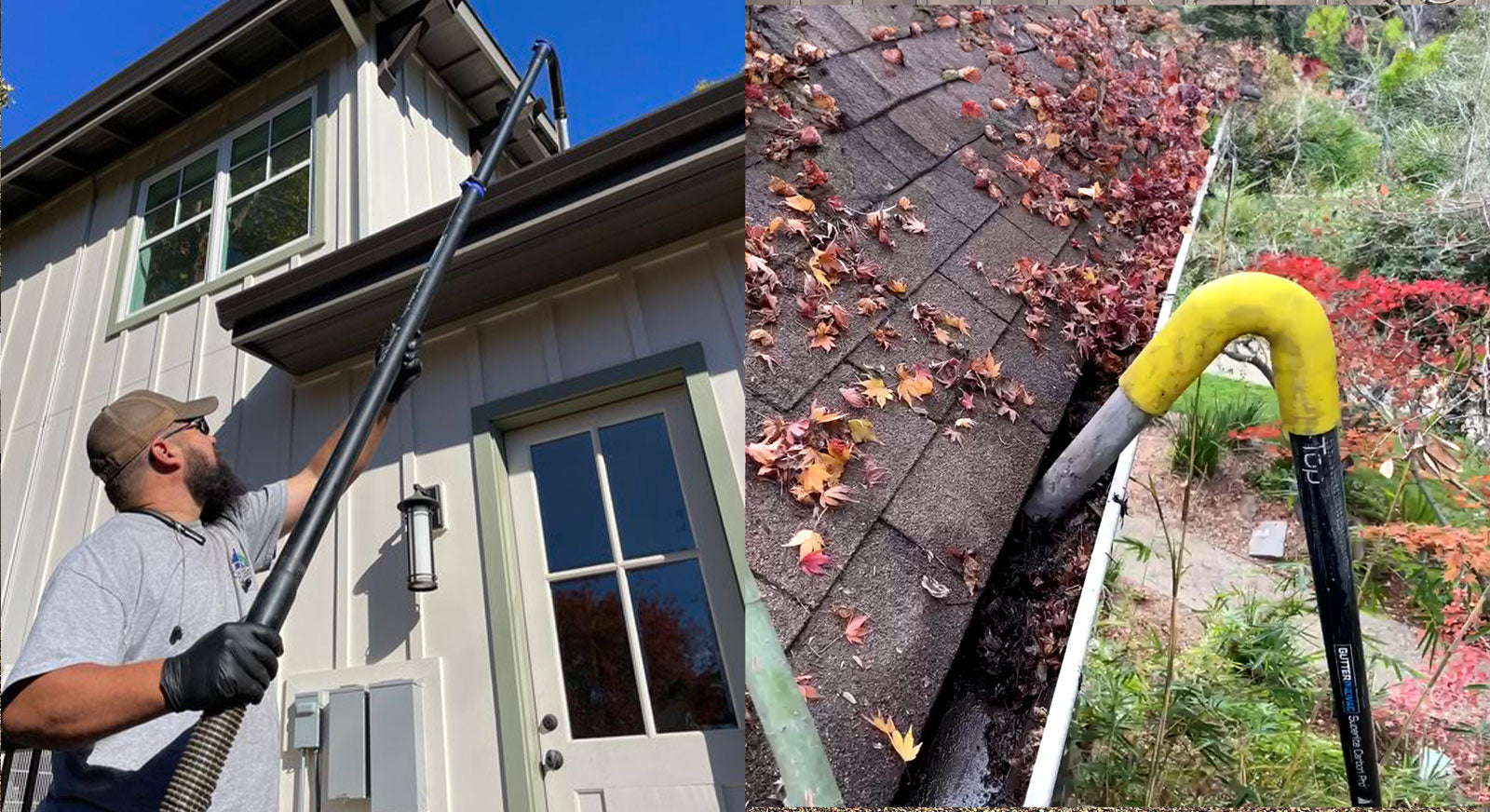
The move toward vacuum based gutter cleaning lets operators work from the ground with commercial gutter vacuum systems and long poles, reducing fall risk and improving job speed compared to ladder first methods.
Licensing, Insurance, and Legal Requirements
Requirements vary by state and municipality, but here is the baseline in most U.S. locations:
Business formation
- Register an LLC or sole proprietorship (cost varies by state)
- Obtain an EIN (free from IRS)
- Open a business bank account
Licenses and permits
- General business license (many cities require one)
- Home improvement contractor license in some states for exterior work
- No specialized gutter cleaning license exists in most jurisdictions
Insurance (non negotiable)
- General liability: commonly $500 to $1,200 per year for $1M coverage
- Workers' compensation: required if you hire employees
- Commercial auto: recommended if using a branded vehicle
Pro tip
Many commercial clients and HOAs require proof of $1M or more in liability coverage before they hire you. Get insured before you market to property managers.
Essential Equipment for a Gutter Cleaning Business
Your equipment determines speed, safety, and earning potential. Here is what a professional operation typically needs.
Core equipment
| Equipment | Purpose | Estimated cost |
|---|---|---|
| Commercial gutter vacuum system | Ground level debris extraction | $2,500 to $7,000 |
| Carbon fiber extension poles (up to 40 ft) | Reach gutters without ladders | $300 to $1,200 |
| Gutter inspection camera | Before and after documentation | $200 to $600 |
| Wet dry attachments and nozzles | Leaves, silt, shingle grit | $100 to $300 |
| Safety gear | Basic compliance and protection | $50 to $150 |
Support equipment
- Vehicle: pickup or van for transport
- Ladders: still useful for inspections and edge cases
- Leaf blower: clearing roofs before vacuuming gutters
- Pressure washer (optional): downspout flushing and upsells
Why vacuum systems over ladders?
Vacuum based cleaning lets you work from the ground, reducing fall risk, improving speed, and expanding the jobs you can accept, including multi story properties that ladder based operators avoid.
Explore professional systems: GutterProVac
Startup Costs Breakdown
Here is a realistic budget broken into tiers.
Budget tier: Solo startup ($3,000 to $5,000)
| Item | Cost |
|---|---|
| Entry level gutter vacuum system | $2,500 to $3,500 |
| Basic extension poles (20 ft) | $200 to $400 |
| Insurance (first year) | $500 to $800 |
| Business registration and licenses | $100 to $300 |
| Marketing basics (cards, GBP setup) | $100 to $300 |
| Total | $3,400 to $5,300 |
Professional tier: Serious operator ($8,000 to $15,000)
| Item | Cost |
|---|---|
| Commercial gutter vacuum (dual motor) | $4,500 to $7,000 |
| Carbon fiber poles (40 ft reach) | $600 to $1,200 |
| Gutter camera system | $200 to $600 |
| Vehicle wrap or branding | $500 to $2,000 |
| Website plus local SEO setup | $500 to $1,500 |
| Insurance (GL plus commercial auto) | $1,200 to $2,000 |
| Uniforms, signage, misc | $300 to $700 |
| Total | $7,800 to $15,000 |
If you want complete packages with vacuums, poles, and accessories, browse: GutterProVac system options.
How to Price Your Gutter Cleaning Services
Pricing depends on property size, gutter length, story count, and debris level. Here are common models and ranges:
Per job flat rate (common for residential)
| Property type | Typical price range |
|---|---|
| Single story (up to 150 linear ft) | $100 to $175 |
| Two story (150 to 250 linear ft) | $175 to $300 |
| Large or multi story (250+ linear ft) | $300 to $500 |
| Commercial building | $400 to $1,500+ |
Add on pricing ideas
- Heavy buildup: +$50 to $100
- Downspout clearing: +$10 to $25 per downspout
- Gutter guard removal and reinstall: +$75 to $200
- Before and after camera report: +$25 to $50
Pricing strategy that works
Start at or slightly below market rate to win early jobs and reviews. After 20 to 30 five star Google reviews, raise prices 20% to 40% and you will often keep the same lead flow, just with better margins.
ROI Calculator: When Will You Break Even?
Here is a realistic solo operator scenario investing $10,000 upfront:
| Metric | Value |
|---|---|
| Startup investment | $10,000 |
| Average job price | $200 |
| Jobs per week (first 3 months) | 4 |
| Jobs per week (months 4 to 12) | 8 |
| Weekly fuel and supplies | $75 |
| Annual insurance and overhead | $2,500 |
Year 1 example math
- Months 1 to 3 (12 weeks): 4 jobs × $200 = $9,600
- Months 4 to 12 (36 weeks): 8 jobs × $200 = $57,600
- Gross revenue: $67,200
- Operating costs: approximately $6,400
- Net profit before taxes: approximately $60,800
- Break even: around 8 weeks (in this modeled scenario)
Operators who invest in efficient commercial equipment usually complete jobs faster, book more appointments per day, and accelerate payback.
Marketing Your Gutter Cleaning Business
You do not need a big budget. You need the right channels.
1) Google Business Profile (free, highest priority)
Claim and optimize your listing immediately. Add service areas, photos of your equipment and completed jobs, and request reviews from every customer.
2) Local SEO and a simple website
A basic site with service pages, location targeting, and a booking form can capture search traffic for queries like “gutter cleaning near me”.
3) Door hangers and flyers
Target neighborhoods with mature trees. A first time offer can convert, especially in fall and spring.
4) Nextdoor and local Facebook groups
Do not spam. Answer homeowner questions and mention your service when it is relevant.
5) Referral program
Offer a small credit for referrals that book. Word of mouth is often the highest converting channel in home services.
6) Before and after photos and video
Use an inspection camera to capture proof. Post to your Google Business Profile and social channels. “Satisfying clean” style clips perform well and build trust fast.
Scaling: From Solo Operator to Crew
Once you consistently book 8 to 10 jobs per week solo, scaling becomes realistic.
Hiring your first employee
- Look for reliability and willingness to learn
- Typical pay ranges vary by market
- Workers' comp becomes required once hiring begins
Adding a second crew
- Duplicate equipment for consistency
- Use job management software if volume increases
- Standardize training so quality stays consistent
The key to scaling efficiently is standardized equipment. When every crew uses the same vacuum system, poles, and workflow, training is faster, parts are interchangeable, and results are consistent.
Equipment Comparison: Vacuum Systems vs Traditional Methods
| Factor | Gutter vacuum system | Ladder plus scoop method |
|---|---|---|
| Speed (typical residential job) | 30 to 45 minutes | 1 to 2 hours |
| Safety risk | Lower, ground level work | Higher, ladder work |
| Multi story capability | Up to 40 ft with poles | Limited without scaffolding |
| Debris containment | Enclosed tank, cleaner finish | Tarps often needed |
| Upfront equipment cost | $2,500 to $7,000 | $200 to $500 |
| Customer perception | Professional, modern process | Traditional method |
The higher upfront cost of a vacuum system can pay back quickly through faster job completion and the ability to safely service properties that ladder based operators decline.
FAQ
How much does it cost to start a gutter cleaning business?
A basic launch can be $3,000 to $5,000 for entry level vacuum equipment, poles, insurance, and registration. A professional setup with commercial gear, branding, and marketing is commonly $8,000 to $15,000.
Do I need a license to clean gutters?
Most locations do not require a specialized gutter cleaning license, but many cities require a general business license. Some states require a contractor license for certain exterior work. Check your local requirements.
How much can I earn cleaning gutters?
Many solo operators target $50,000 to $90,000 per year depending on pricing, seasonality, and lead flow. With crews, revenue can scale significantly, but overhead and systems increase too.
What is the best gutter cleaning equipment for professionals?
A typical pro setup includes a commercial gutter vacuum system, carbon fiber poles with up to 40 ft reach, and a gutter inspection camera to document results.
Is gutter cleaning seasonal?
Peak seasons are commonly spring and fall, but many operators stay busy year round by adding pressure washing, roof cleaning, gutter guards, and window cleaning.
How long does it take to clean gutters on a typical house?
With a commercial gutter vacuum system and poles, a single story home often takes 30 to 45 minutes, and many two story homes take 45 to 75 minutes, depending on debris and access.
Want to build a pro setup faster?
Browse complete gutter vacuum system packages designed for professional operators.